


Pressure washing water usage is a fair question in Cape Town this summer. The dams are lower than a year ago, the South African Weather Service expects a very strong El Niño, and the City has asked every household to cut water use by at least 10%. A pressure washer uses far less water than a garden hose for the same job, but it still uses water. This guide gives the real numbers, explains what El Niño means for Cape Town, sets out the water rules and shows five easy ways to clean outside while using less.
- A pressure washer can use up to 80% less water than a garden hose for the same cleaning job.
- Cape Town’s dams were at 71.7% on 11 November 2026, and the City wants households to use at least 10% less water.
- Hosing down paving with municipal drinking water is not allowed under the City’s permanent water rules.
- Our pressure washing costs R13/m² (minimum R650). Water delivered for the job is billed separately.
Pressure washing water usage: the real numbers
A pressure washer pushes a small amount of water through a narrow nozzle at high pressure. The force of the water does the cleaning, not the volume. A garden hose does the opposite: lots of water at low pressure, so you need more water and more time to shift the same dirt.
Kärcher, the pressure washer maker, compared the two on a set of patio furniture. The pressure washer took about 2.5 minutes and about 20 litres of water. The garden hose took 5 minutes and up to 100 litres. That is up to 80% less water for the same result (Kärcher’s comparison). Results vary with the machine, the nozzle and the surface, but the pattern holds: less water, used faster.
The water you use also depends on how you work. Spraying the same patch twice, leaving the trigger open while you move the hose, and washing in the midday heat all waste water. A good crew plans the order of work so every litre does a job.
El Niño and Cape Town’s water this summer
On 1 September 2026 the South African Weather Service (SAWS) warned that the current El Niño is likely to become very strong, possibly the strongest in living memory. SAWS said below-normal rainfall is the most likely outcome over most of South Africa from October to December 2026 (SAnews).
Cape Town is a winter-rainfall city, so El Niño does not cut its main rainy season in the same way it hits the summer-rainfall provinces. What it does bring is a higher chance of a hotter-than-normal summer. Hot days mean more evaporation from the dams and more water used in gardens and pools. SAWS has also pointed to uncertainty about rainfall in the 2027 winter, which is what refills the dams.
The starting point is not great. In July 2026, Cape Town International Airport recorded only 14.4 mm of rain, its driest July in 68 years. On 11 November 2026 the City’s dams were at 71.7%, against 83.2% a year earlier. The City says use reached 912 million litres a day, above its target of 860 million, and has asked households to cut use by at least 10% (City of Cape Town via SAnews). No new restrictions had been announced at the time of writing. The national Department of Water and Sanitation will decide after its yearly review of the system.
How we keep pressure washing water usage low
This boundary wall in Cape Town needed a proper clean before it could be repainted. Our crew washed it with a pressure washer and lance, working from top to bottom so the dirty water ran off once, not three times. The clean wall was then repainted.
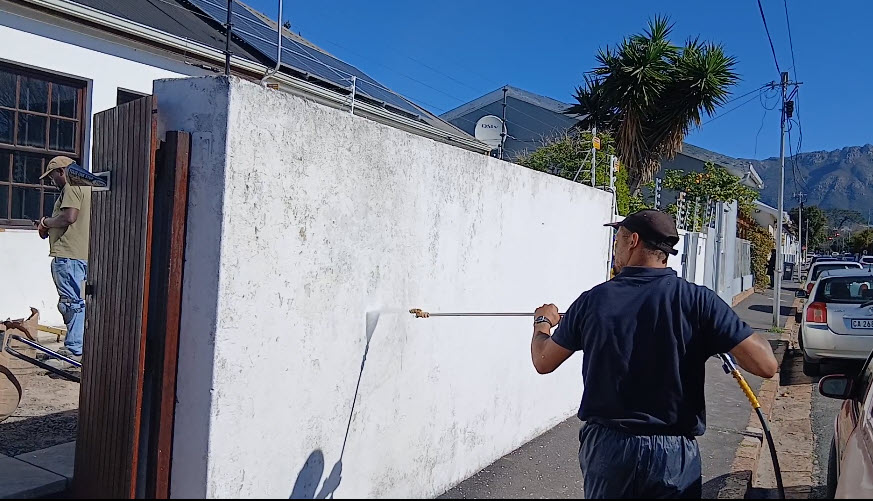 BEFORE
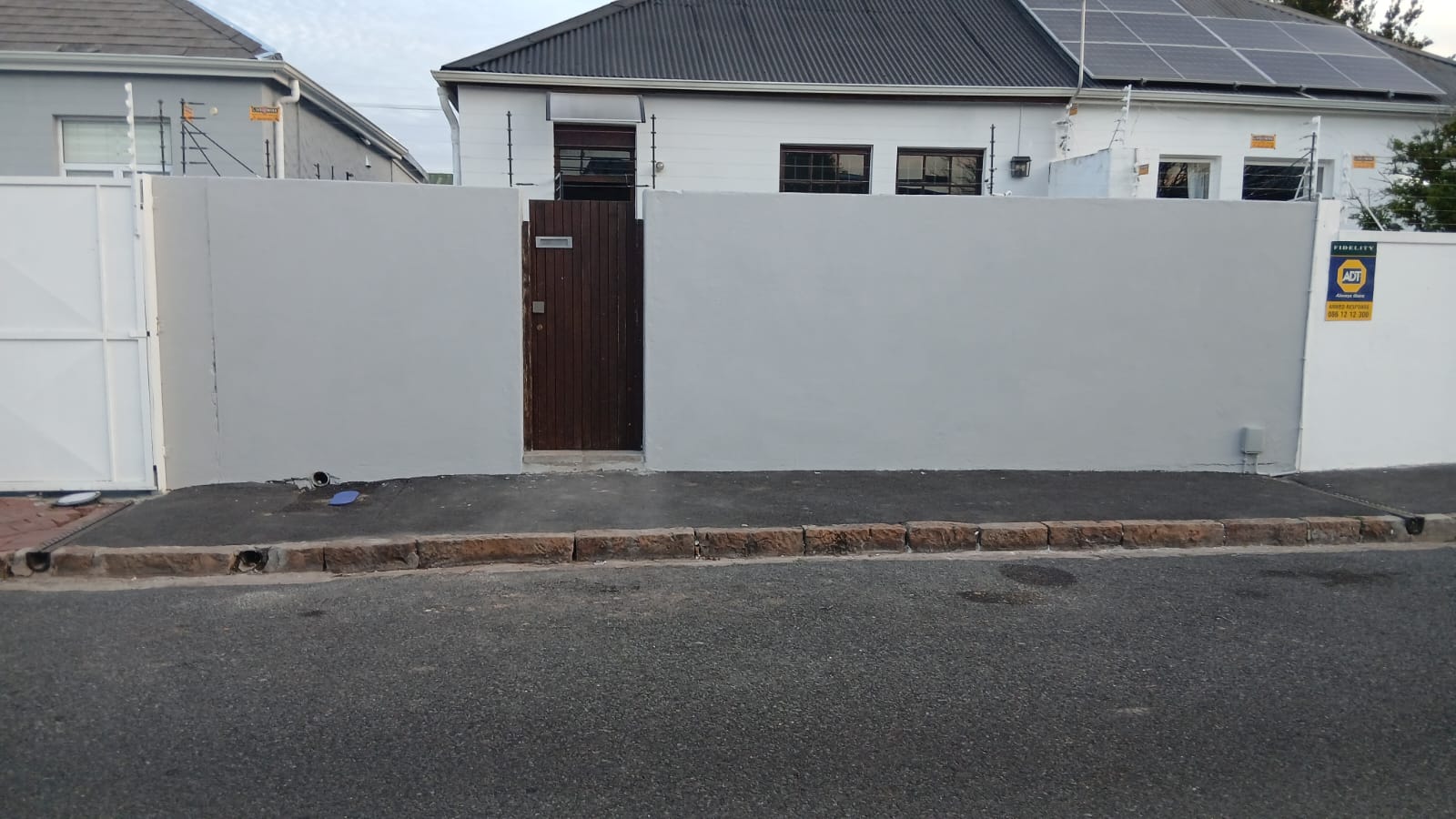 AFTER
The same approach works on roofs, paving and driveways. Every pressure washing job we do follows the same water-wise habits:
- The right nozzle and pressure for the surface, so the dirt comes off in one pass
- A trigger gun that stops the water the moment the operator lets go
- Work planned from the top down, so nothing is washed twice
- Early starts on hot days, before the sun evaporates the water
Video: one of our crews pressure washing a roof in Cape Town. Watch on YouTube
How much water a pressure washer uses, what El Niño means for Cape Town and how to clean outside with less. Includes a checklist, our process and our prices.
Download the free guideCape Town’s water rules for washing outside
Cape Town has permanent water-use rules under its Water By-law. They apply all the time, even when there are no water restrictions (City of Cape Town). The ones that matter for outdoor cleaning are:
- Hosing down paved or hard surfaces with municipal drinking water is not allowed.
- A hosepipe on municipal water must have a control device, such as a spray nozzle or self-closing trigger.
- Washing a car with a hosepipe needs an automatic self-closing nozzle, or use a bucket.
- Gardens may only be watered before 09:00 or after 18:00.
This is why water delivered for a washing job is billed separately on our quotes: we bring the water for the job rather than hosing your paving down from the municipal tap. If restrictions are announced this summer, check the latest rules with the City before you wash anything yourself.
5 easy ways to use less water when you clean outside
- Sweep first. Brush off leaves, sand and loose dirt before any water touches the surface.
- Use pressure, not volume. A pressure washer with a trigger gun uses a fraction of the water of an open hose.
- Wash once, from the top down. Roofs before walls, walls before paving, so the run-off does not dirty a surface you have already cleaned.
- Pick the right time. Work early in the morning, before the heat evaporates the water and dries the dirt back on.
- Clean on a schedule. A light wash every few months uses far less water than a heavy clean after years of build-up.
What pressure washing costs in Cape Town
| Service | Price |
|---|---|
| Pressure washing: roofs, walls, driveways and paving | R13/m², minimum R650 |
| Water delivered for the job | Billed separately |
| Essential Bundle, includes a quarterly pressure wash | R1,250/month |
| Premium Bundle, includes a quarterly pressure wash | R2,600/month |
Worked example: a 60 m² driveway costs 60 × R13 = R780 to wash, plus the delivered water. Measure your own driveway, roof or walls on the satellite map with our online estimator, or read more about pressure washing and our maintenance plans.
Hose, bucket or pressure washer?
| Method | Water | Best for |
|---|---|---|
| Open garden hose | Highest | Not allowed on paving with municipal water |
| Bucket and brush | Lowest | Small spots, cars, garden furniture |
| Pressure washer with trigger | Low for the area cleaned | Roofs, walls, driveways and paving |
For a whole roof, a long boundary wall or a big driveway, a pressure washer is the water-wise choice. For a few marks, a bucket and brush is enough.
Five questions to ask before you hire anyone
- Where does the water for the job come from, and is it on the quote?
- Do you use trigger guns that stop the water when the operator lets go?
- Is the price per square metre, with the minimum job stated?
- Will you protect my garden and plants from the run-off?
- Will I get before and after photos?
Ask us any of these at the site visit and we will answer them before you accept the quote.
Lower pressure washing water usage all year
The cleaner a surface stays, the less water it takes to clean. Trim plants back from walls so they dry faster after rain, keep gutters clear so water does not stain the walls below, and sweep paving regularly so dirt does not get ground in. Our plans for homeowners and maintenance contracts spread the work through the year, so each wash is lighter and quicker.
Pressure washing water usage: frequently asked questions
How much water does a pressure washer use?
It depends on the machine. In Kärcher’s patio furniture test, a pressure washer used about 20 litres in 2.5 minutes, against up to 100 litres in 5 minutes for a garden hose. That is up to 80% less water for the same job.
Is pressure washing allowed in Cape Town?
There is no general ban on pressure washers. The City’s permanent rules say you may not hose down paving or hard surfaces with municipal drinking water, and hosepipes must have a control nozzle. If restrictions are announced, check the latest rules with the City first.
What does El Niño mean for Cape Town’s water?
SAWS expects a very strong El Niño, with a higher chance of a hotter-than-normal summer in the Western Cape. Hot weather increases evaporation and water demand while the dams are already lower than last year, so the City has asked households to cut use by at least 10%.
How much does pressure washing cost?
Our pressure washing is R13/m² with a minimum job of R650. Water delivered for the job is billed separately because of Cape Town’s water rules.
Which areas do you cover?
Cape Town’s northern suburbs (Bellville, Loevenstein, Durbanville, Welgemoed, Brackenfell and Kuils River), southern and central suburbs (Constantia, Meadowridge, Bergvliet, Tokai, Claremont, Pinelands, Thornton and Mowbray), and Somerset West, Strand and Stellenbosch.
Get a fixed price from our own crew
Book a free site visit and we send a fixed written quote, with before and after photos of the finished job. Read more about homeowners.